The Architecture of Belief
Theology is often defined as "faith seeking understanding" (fides quaerens intellectum). On this page, we break down the complex, beautiful, and essential concepts that form the bedrock of Christian orthodoxy. These are not just academic ideas, but historical frameworks through which we view God, humanity, and eternity.
The Holy Trinity
The doctrine of the Trinity asserts that there is one God who eternally exists as three distinct Persons: The Father, the Son, and the Holy Spirit. These three are co-equal and co-eternal, sharing the same divine essence.
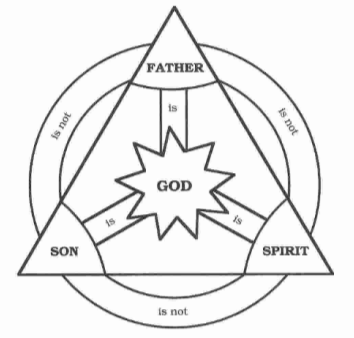
Source Architecture Reference: www.gotquestions.org
Key Distinctions
- One Essence: God is not three gods (tritheism), nor is he one person changing masks (modalism).
- Three Persons: The Father is not the Son, the Son is not the Spirit, and the Spirit is not the Father.
- Equality: Each person is fully God, possessing all divine attributes natively.
Biblical Basis
While the technical word "Trinity" is not in the text, the conceptual matrix is woven throughout. Historical markers include the Baptism of Jesus (where all three branches manifest simultaneously) and the Great Commission command to baptize in the singular name of the Father, Son, and Holy Spirit.
Filter by Department of Study
The Hypostatic Union
This concept explains how Jesus Christ is both fully God and fully man in one person forever. Explicitly defined at the historic Council of Chalcedon (AD 451).
- Truly God: Christ possesses the full uncreated nature of the Father.
- Truly Man: Christ possesses a real human body and human soul, experiencing physical life without sin.
- Indivisible: These two natures are joined perfectly without confusion, change, division, or separation.
The Substitutionary Atonement
Often framed as Penal Substitutionary Atonement (PSA), this doctrine defines the legal and spiritual work accomplished by Christ on the cross.
- Penal: Christ bore the legal penalty and curse demanded by the moral law of God against broken humanity.
- Substitutionary: Christ stood strictly in the place of sinners, acting as their perfect dynamic representative.
- Propitiation: The sacrifice completely satisfied the objective justice of God, turning away wrath and reconciling the relationship.
Justification by Faith
The judicial declaration by God that an unrighteous sinner is completely righteous in His sight. This concept serves as a central pillar of Protestant Reformation theology.
- Imputed Righteousness: The protestant belief that we are not instantly transformed in our actions, but Christ’s flawless righteousness is credited to our account.
- Grace Alone: Received exclusively as a gift from God, entirely decoupled from human merit or ritual performance.
- Peace with God: Results in the objective removal of legal guilt and adoption into the divine family.
The Ordo Salutis
Translated as the "Order of Salvation," this architectural concept maps out the logical, structural steps in the realization of redemption in a believer's history.
- Calling & Regeneration: The external proclamation of the gospel paired with the internal "quickening" of the soul by grace.
- Conversion: The dual, simultaneous response of dynamic repentance (turning away from sin) and saving faith.
- Glorification: The final, ultimate stage—the physical resurrection of the body and removal of all presence of sin at the end of the age.
Indwelling & Sanctification
The progressive, lifelong work of the Holy Spirit inside the believer, steadily transforming character and generating practical holiness.
- Regeneration: The instantaneous "new birth" or quickening that renders a dead soul spiritually responsive.
- Gifts (Charismata): The technical empowerment of individuals to build and sustain the historic church body.
- Fruit of the Spirit: The organic shift in internal virtue (love, joy, self-control) proving the structural reality of the Spirit's presence.
Filioque Controversy
A massive historical and structural turning point regarding the relationship of the Holy Spirit within the inner life of the Trinity.
- The Clause: Latin for "and the Son," inserted into the Nicene Creed by the Western church.
- The Debate: Does the Spirit proceed eternally from the Father alone, or from the Father *and* the Son?
- The Schism: This distinct concept served as a primary theological catalyst for the Great Schism of 1054 between East and West.
Doctrine of Inspiration
The theological understanding that God superintended the human authors of historical texts so that their writing remains precisely what God intended.
- Verbal Plenary: Every word is inspired contextually, not just the generalized macro themes or moral principles.
- Authority: Because it points to a divine anchor, it stands as the final structural rule for faith and community practice. This also ties with Inerancy.
- Sufficiency: Contains everything logically required for salvation, spiritual training, and ethical guidance.
The Canonization Process
The historical and analytical discovery of which texts carried unique, intrinsic divine authority to form the closed library of the Bible.
- Apostolicity: Was the text written by an apostle or someone directly linked to their immediate eye-witness circle?
- Orthodoxy: Did the document square cleanly with the "rule of faith" handed down uniformly through the churches?
- Catholicity: Was the letter universally recognized and utilized across the entire geography of the early historic church?
Doctrine of Biblical Inerrancy
The unquestionable accuracy of the Bible. This is the foundation for anything and everything that uses the Bible for evidence.
- Authority See "Doctrine of Inspiration". The fact that it is inerrant means that none of the commands are inaccurate or not what God intended, among other things.
- Word Meaning: The word "Inerrant" literally means "Without Error".
- Evidence: This supports evidence because it means that the evidence can not be false if it came from the Word.
The Body & Bride of Christ
The systemic study of the Church (Ecclesiology), focusing on its identity both as a visible physical institution and an invisible global communion.
- The Visible Church: The physical, local gathering of believers containing institutional structures, leadership offices, and sacraments.
- The Invisible Church: The true universal assembly of all genuine souls across time and geography, known perfectly only to God.
- Sacramental Grace: The physical markers (such as Baptism and the Eucharist/Lord's Supper) used as visible signs of internal spiritual realities.
Polity Models
The structural, organizational models utilized to determine authority, office functions, and accountability within Christian communities.
- Episcopal Polity: Structured hierarchy governed by a centralized order of bishops (e.g., Anglican, Roman Catholic).
- Presbyterian Polity: Governed by representative, local councils of elders called presbyteries (e.g., Reformed traditions).
- Congregational Polity: Total local church autonomy where the voting congregation functions as the ultimate earthly authority.
Theodicy & Sovereignty
The reconciliation of an all-powerful, all-good God with the tangible presence of evil and suffering in the world.
- The Free Will Defense: Asserts that true love and virtue require real moral agency, which carries the inherent risk of choosing rebellion.
- The Greater Good: The philosophical framework holding that God permits systemic suffering to ultimately produce greater structural values.
- The Decline: The logical tension that forces deep analytical discovery.
The Realized "Already / Not Yet"
A structural paradigm for interpreting the timeline of redemptive history, the Kingdom of God, and the ultimate destiny of creation.
- The Already: The Kingdom of God was definitively inaugurated by Christ's life, death, and resurrection—breaking into history now.
- The Not Yet: The full, absolute consummation of that Kingdom awaits His physical return, leaving creation in a temporary structural tension.
- The Tension: Believers experience real spiritual victory now, yet still navigate physical decay, sickness, and systemic brokenness.